Quality Custom Cabinet Construction: What You Don't See Matters Most
When someone walks into a finished kitchen, they're usually drawn to the things they can see first. The door style, the wood species, the color, or the hardware all make a first impression.
What they don't see is everything that went into making those cabinets perform just as well ten or twenty years from now.
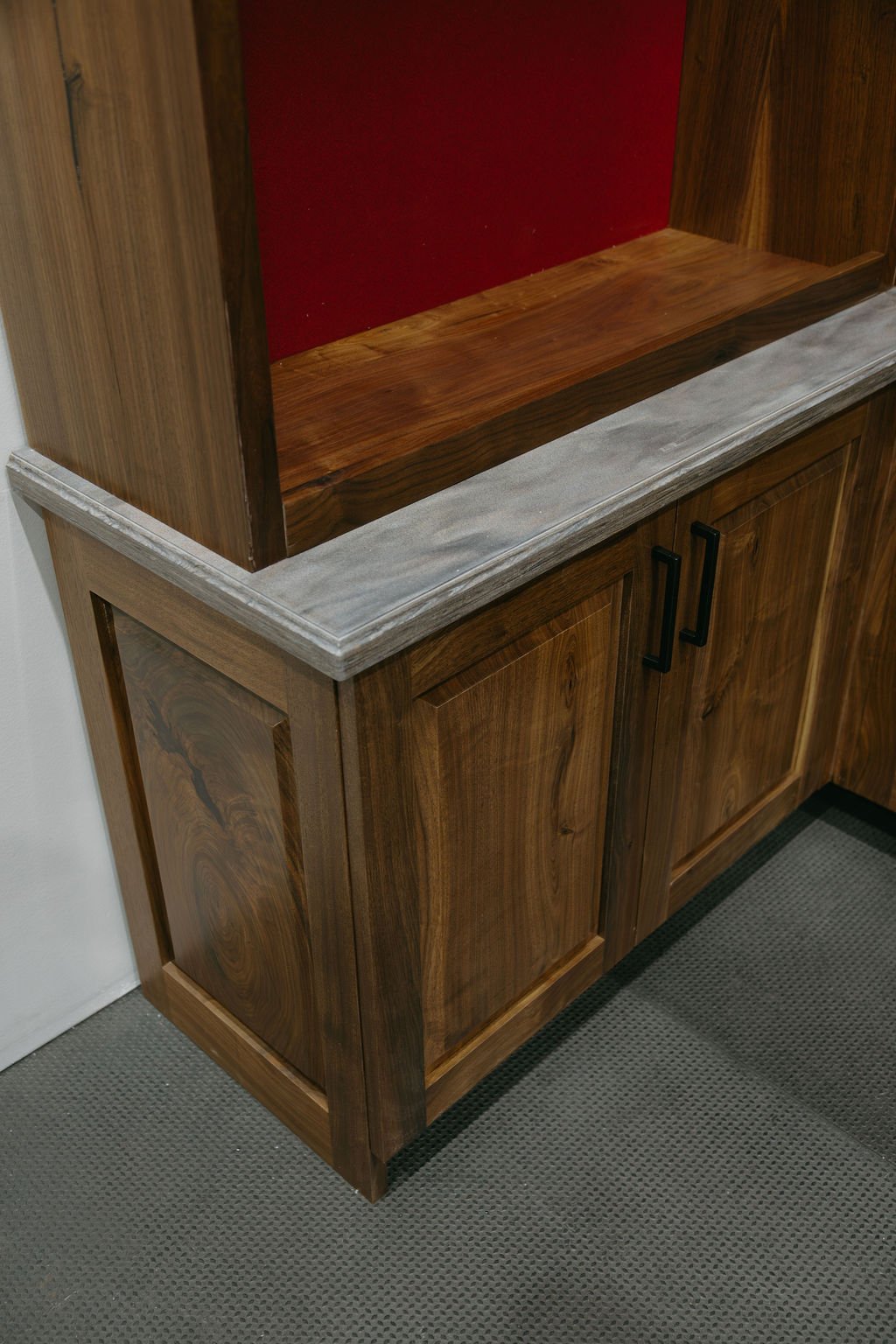
I've always believed that quality custom cabinet construction starts long before the first cabinet is assembled. It starts with the materials I choose, the way I build each cabinet, and the details that most people will never notice until they've lived with them.
Better Cabinets Begin With Better Materials
One of the biggest differences between custom and mass-produced cabinets is what's underneath the finish.
Many factory-built cabinets use particle board because it's efficient to manufacture and keeps costs down. There's nothing inherently wrong with that, but over the years I've seen what can happen when moisture finds its way into it. Bottom panels begin to swell, drawer slides loosen, and screws lose their holding power because the material simply isn't designed to handle decades of everyday use.
That's why I build my cabinets using ¾-inch solid-core plywood. It provides better strength, better screw retention, and greater resistance to moisture. It's a material I trust because I've seen how it performs over time.
Strength Is Built Into Every Cabinet
People often ask what makes a custom cabinet stronger than one they can buy off the shelf.
For me, it comes down to how it's built.
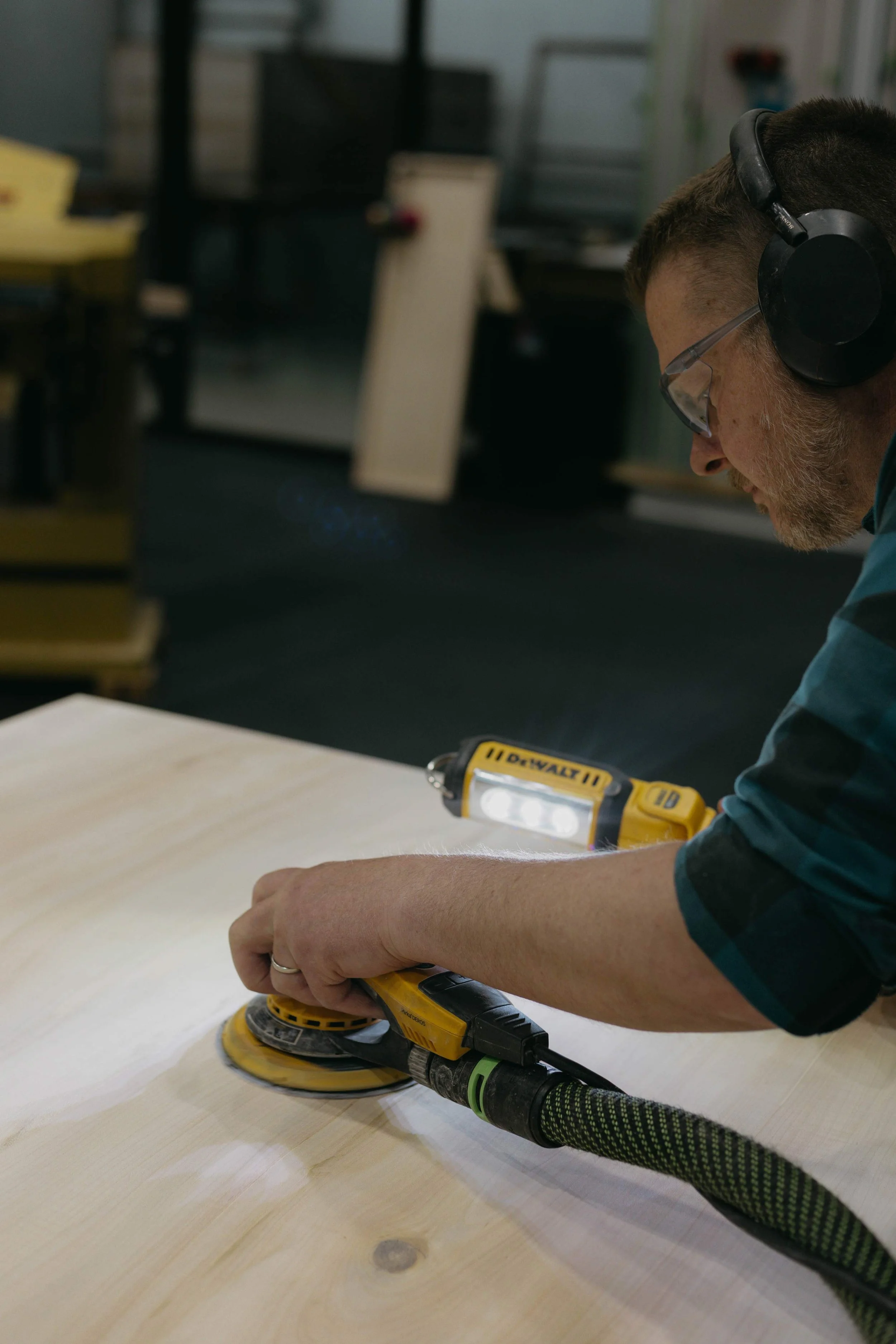
Every cabinet I make uses dado joinery, where each panel fits into precisely cut grooves before it's glued and fastened together. That creates a cabinet that's solid from the inside out.
I've actually had to take apart cabinets after making a mistake in the shop. More often than not, I can't get them apart without destroying the material itself. Even a large mallet isn't enough to break the joints loose.
That's frustrating when you've made a mistake, but it's exactly what I want for my customers. If it's difficult for me to take apart in my shop, it's going to hold up exceptionally well in your home.
The Difference Is in the Details
One of the most time-consuming parts of my process happens before I ever cut a board.
I spend hours sorting through lumber because I want every piece to work together visually. If one board doesn't belong, I won't use it. I'll go find another one.
Matching grain isn't just about appearance, either.
Wood naturally expands and contracts as the seasons change. When boards with similar grain patterns are used together, they tend to move together as well. That creates a more stable piece over time.
Mass-produced cabinets often use narrow strips of wood assembled without much consideration for how they'll look together. Once you've seen a carefully matched cabinet door beside one made from mismatched pieces, it's hard to ignore the difference.
Once you see it, you can never unsee it.
Want to learn more?
We love educating our customers on their options for quality custom cabinet construction. Reach out to us to visit about next steps.
The Finish Should Last as Long as the Cabinet
A quality finish does more than make wood look beautiful.
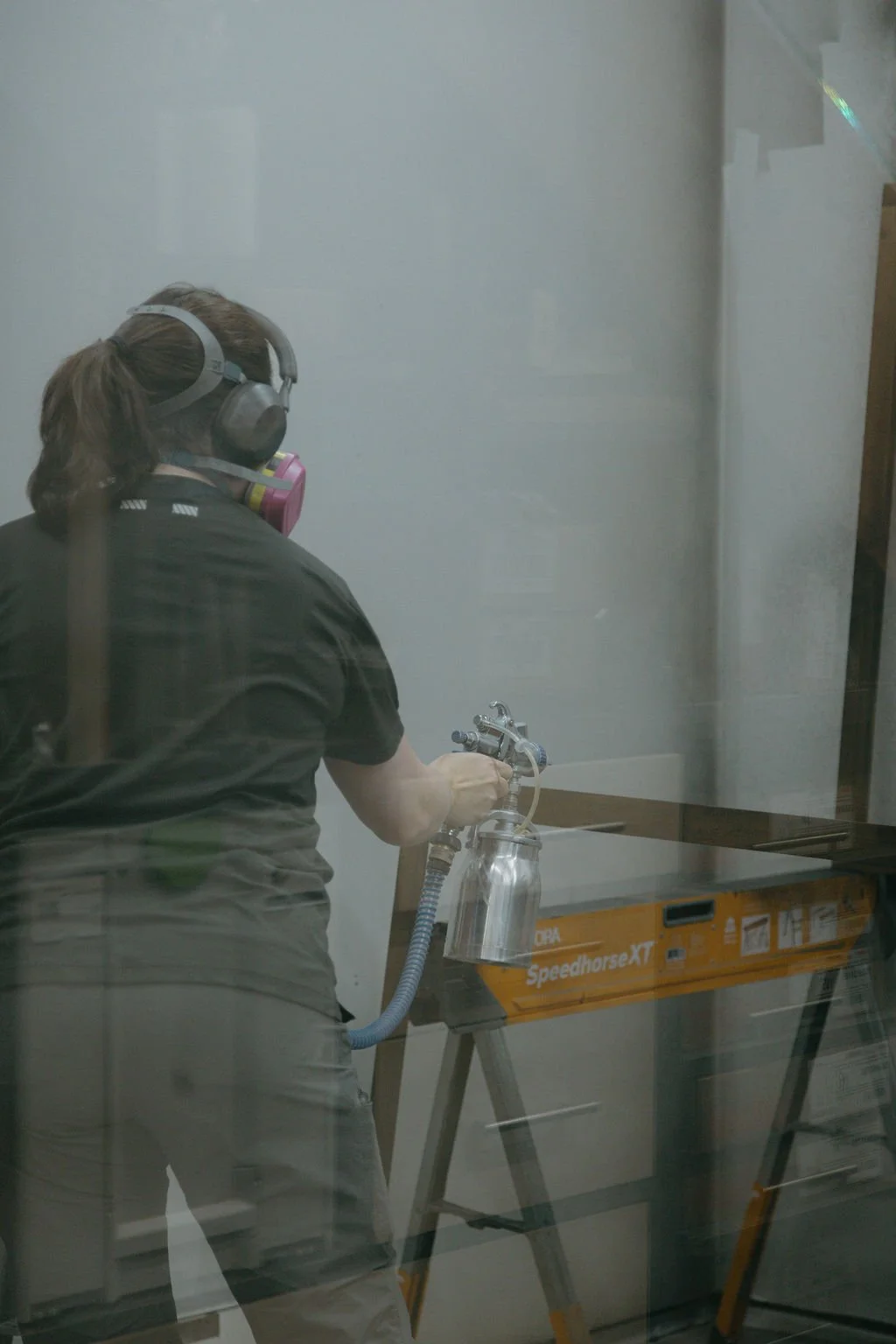
I use professional two-part finishes because they're designed to resist scratches, wear, and everyday life. Kitchens are busy places, and cabinets should be able to handle everything from cooking and cleaning to kids and family gatherings.
Many factory finishes are chosen because they dry quickly and keep production moving. My priority is different. I want the finish to continue protecting the wood years after installation.
Quality Isn't Always Obvious on Day One
The biggest differences between custom cabinets and mass-produced cabinets usually aren't obvious the day they're installed.
You notice them years later.
They're the drawers that still open smoothly. The doors that stay aligned. The finish that still looks beautiful. The cabinets that continue doing exactly what they were built to do.
That's what quality custom cabinet construction means to me. It's not about building something that simply looks good today. It's about building something that homeowners can continue enjoying for years to come.