
Reproducing a Historic Wood Door: Giving a 1912 Home New Life
One of the things I appreciate most about woodworking is that not every project starts with new materials.
Sometimes, the best approach is to preserve a piece of history. Other times, it means giving old materials a second life in a way that honors where they came from.
That is exactly what made this historic wood door reproduction project so rewarding.
The finished door will return to a home built in 1912 in Gary, South Dakota, but the story of the door and its materials begins somewhere else.
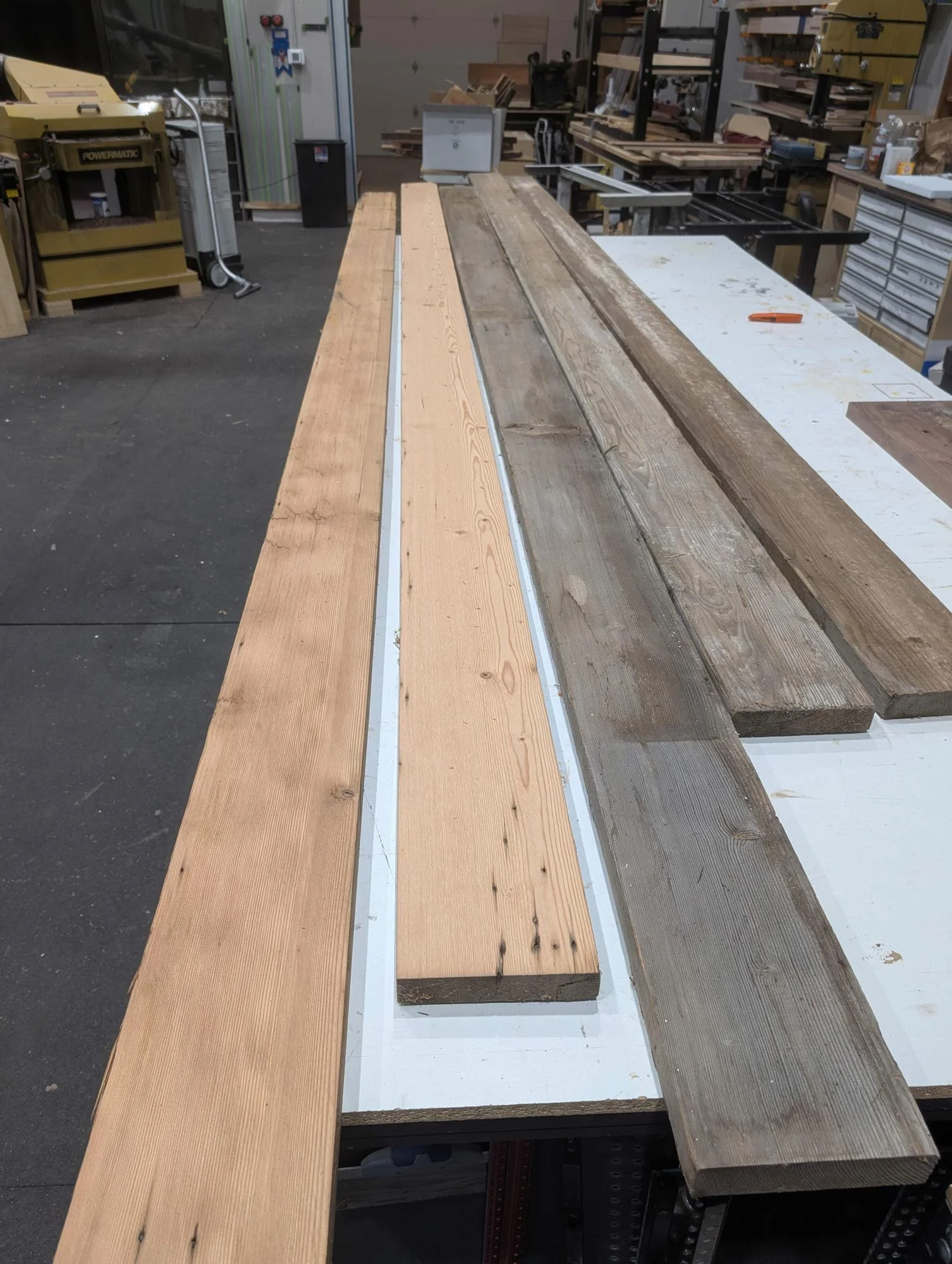
Finding the Right Wood for a Historic Door Reproduction
When you are building a reproduction door for a historic home, the materials matter just as much as the craftsmanship.
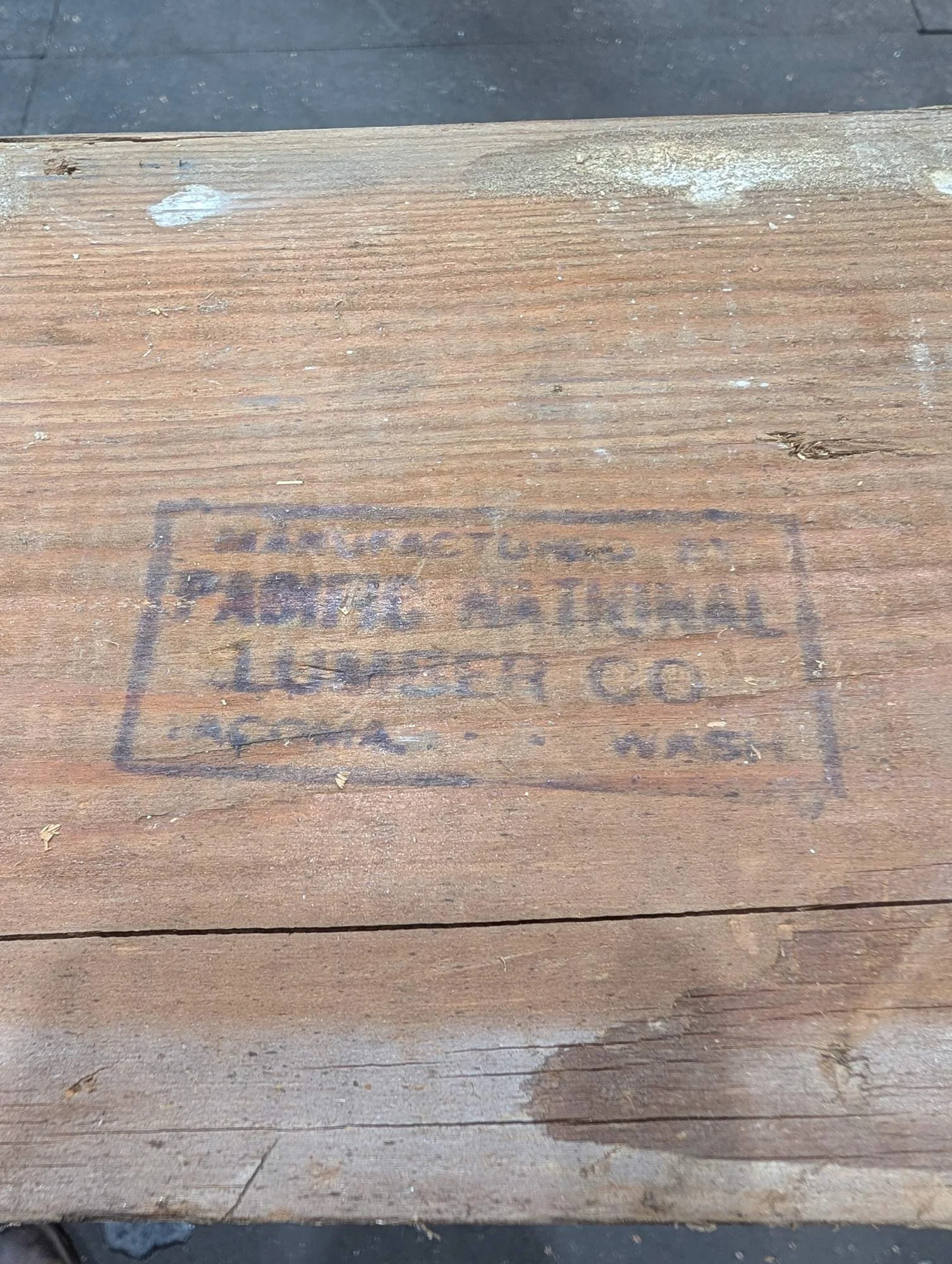
For this project, I used reclaimed Douglas fir from an old schoolhouse in South Dakota. While the wood itself may have originated elsewhere, it spent years serving that building, and that history can be seen in the rich character and patina it developed over time.
You simply cannot recreate that same depth and personality with brand-new lumber.
Every board carries its own story. My job is to preserve as much of that character as possible while creating a door that will continue serving another home for generations.
See the Transformation
Watch the Behind-the-Scenes of selecting the wood for this project.
Preparing Reclaimed Douglas Fir Lumber
Before construction begins, every board has to be carefully evaluated.
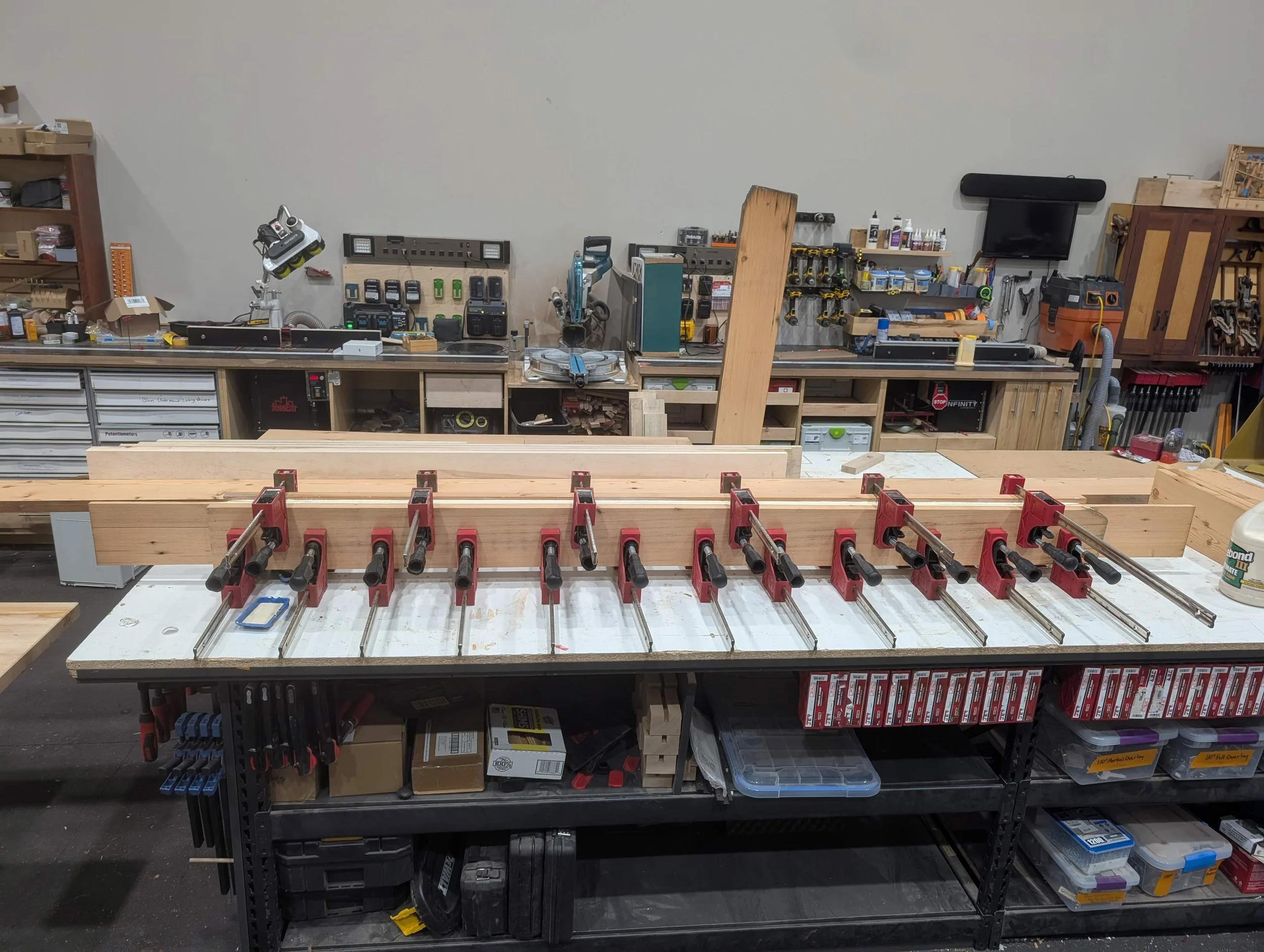
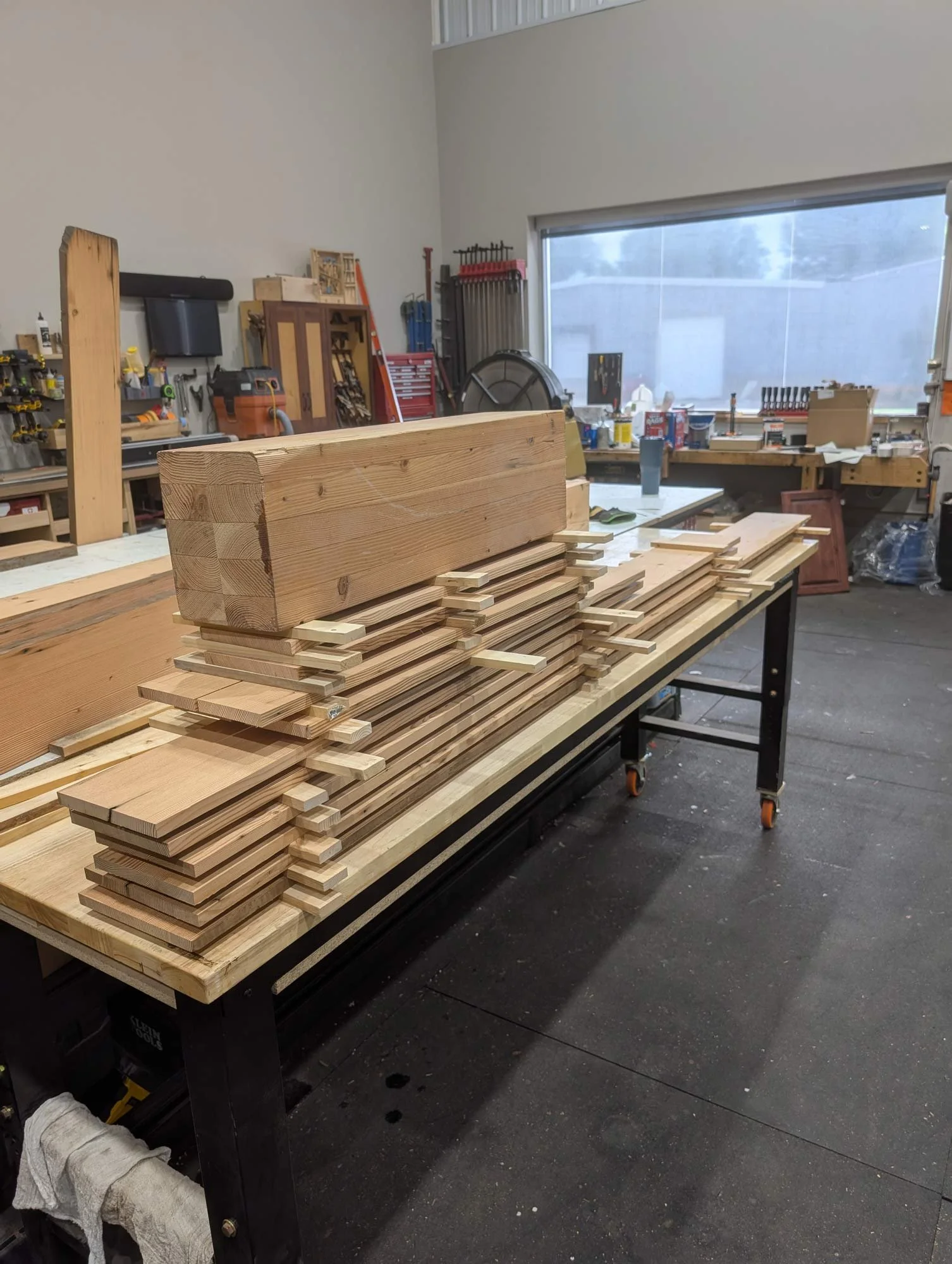
I spend time cleaning the reclaimed lumber, removing years of dirt and debris, and selecting pieces that work well together. Just because a board is old does not automatically mean it belongs in the project.
I look closely at the grain patterns, coloring, stability and character of each piece. The goal is to choose boards that complement one another so the finished door feels cohesive rather than pieced together.
That selection and preparation process takes time, but it makes a significant difference in the finished product.
“The goal is to choose boards that complement one another so the finished door feels cohesive rather than pieced together.”
Matching the Original Woodwork and Patina
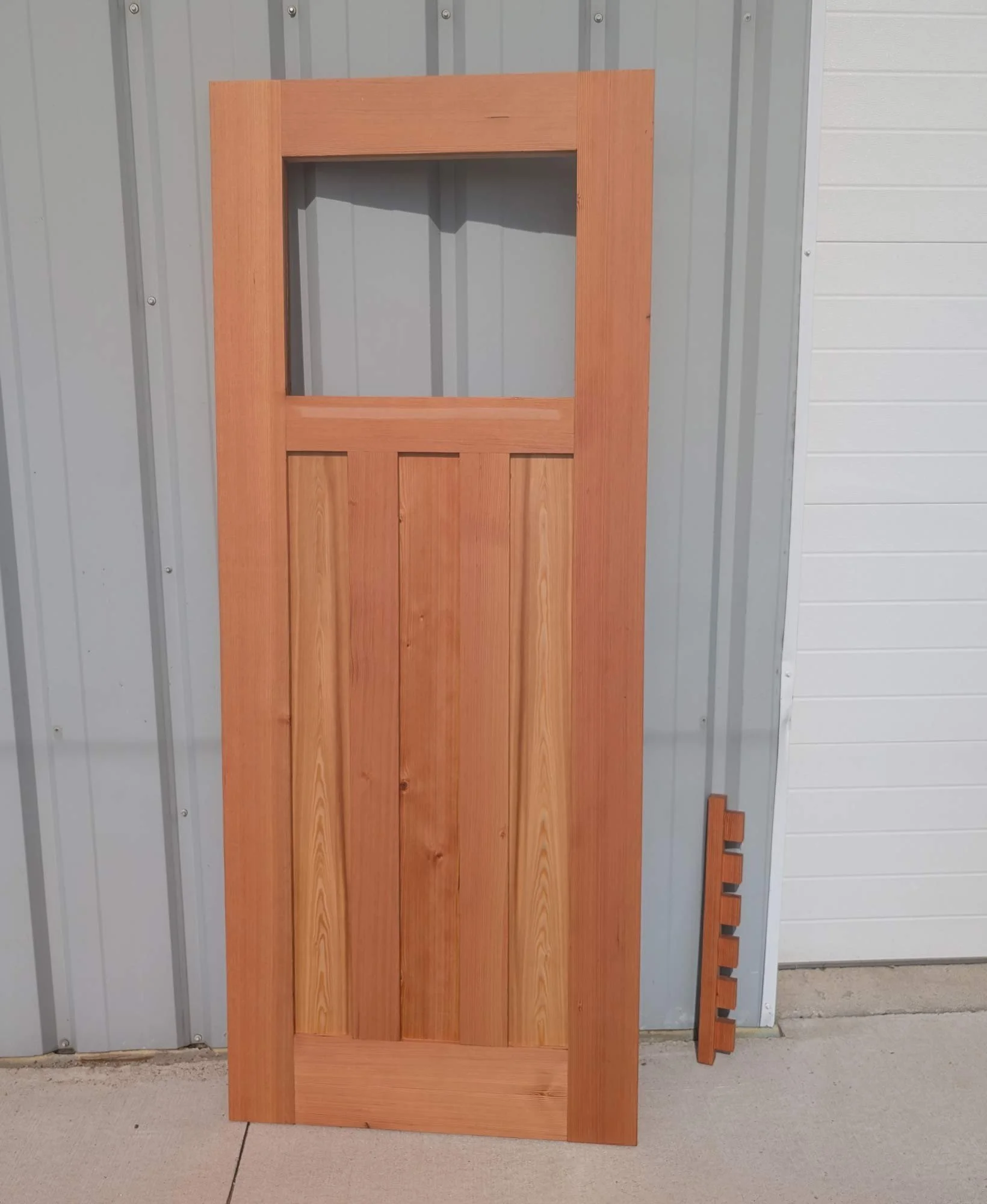
Building the door was only part of the challenge. The finished piece also needed to look like it belonged inside a home built more than a century ago.
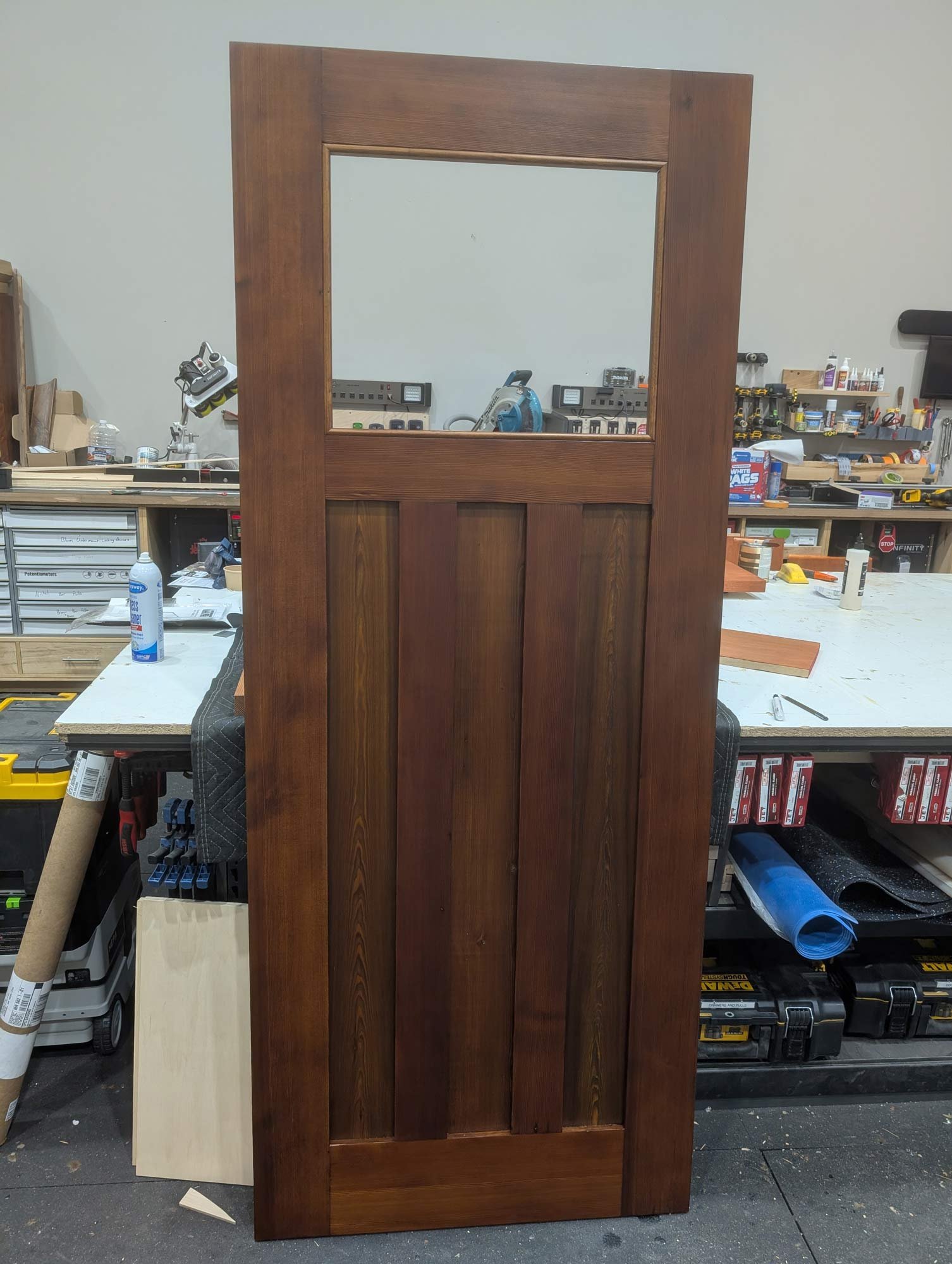
To match the aged appearance of the original woodwork that remains in the house, I used a combination of chemical and natural wood-aging techniques. This allowed me to carefully develop the color and patina of the reclaimed Douglas fir instead of applying a standard stain that might look too new or uniform.
The goal was not to make the door look artificially distressed. It was to give the wood the depth, variation and warmth that develops naturally over many years.
I also used a very old varnish recipe similar to the finish used on the original door. That traditional finish helped bring out the depth of the grain and allowed the new reproduction door to blend more naturally with the existing woodwork throughout the home.
Matching historic woodwork requires more than choosing a similar stain color. The age of the wood, the way the finish interacts with the grain and the sheen of the final surface all affect whether the new piece truly feels like it belongs.
Building a Door for the Next Hundred Years
One thing I enjoy about reproduction work is the responsibility that comes with it.
The original builders of this home created something that has stood for well over a century. That is not something I take lightly.
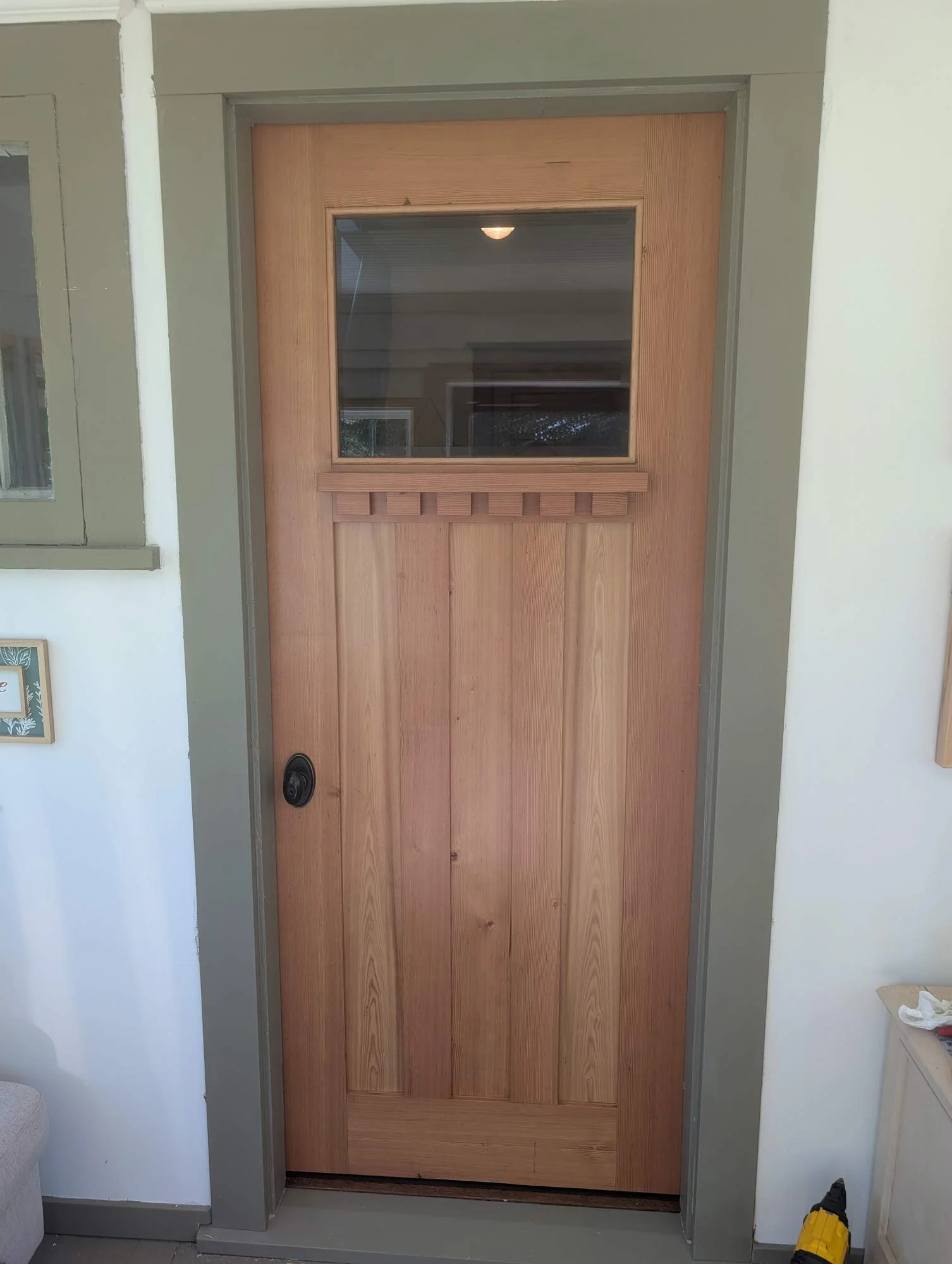
When I build a replacement door for a historic home, I am not trying to make it look brand new. I am trying to create something that feels as though it has always belonged there while still meeting the functional expectations of today’s homeowner.
That means respecting the home’s architectural history while using the craftsmanship and construction methods I trust today.
Why Custom Woodwork Matters in a Historic Home
Historic homes have a character that is difficult to describe until you have spent time inside one.
The proportions are different. The materials are different. The details tell a story.
That is why projects like this deserve more than a one-size-fits-all replacement.
A custom reproduction door can preserve the personality of a historic home while providing the strength, durability and functionality needed for everyday use. It is a way of honoring the past without sacrificing quality.
Every Piece of Reclaimed Wood Has a Story
One of the reasons I enjoy working with reclaimed lumber is that it serves as a reminder that good materials do not lose their value with age.
In this case, Douglas fir that once served in a South Dakota schoolhouse will soon become part of another historic building in Gary, SD.
To me, that is one of the most rewarding parts of custom woodworking.
It is not always about starting with something new. Sometimes, it is about recognizing the value that is already there and giving it the opportunity to become part of another story.
Let’s Work Together
We’d love to get in touch with you and talk through your next project. Reach out through our contact page.